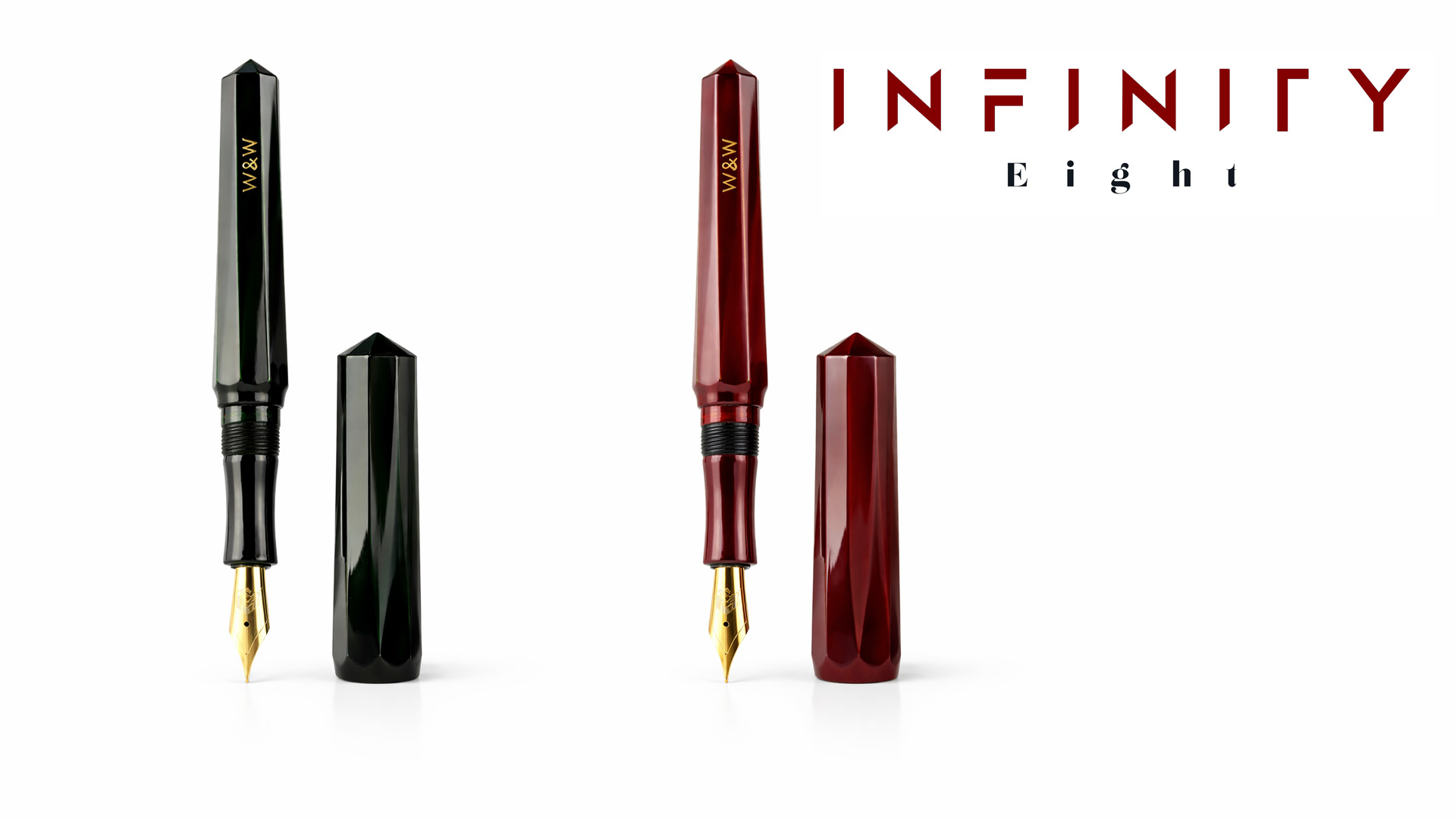
Infinity Eight
A Dialogue Between European Engineering and Japanese Art
Infinity Eight is a study in controlled geometry and layered depth.
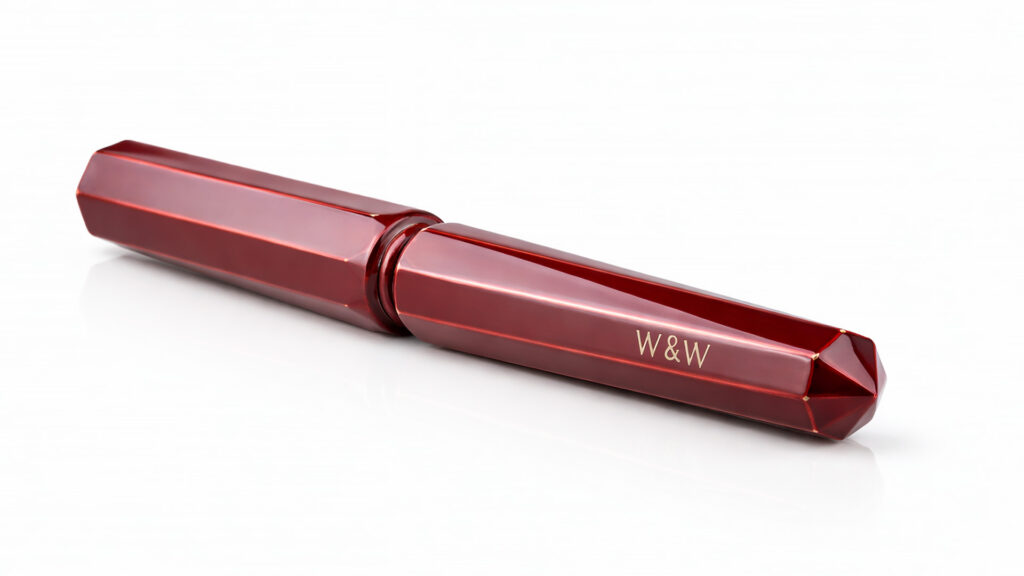
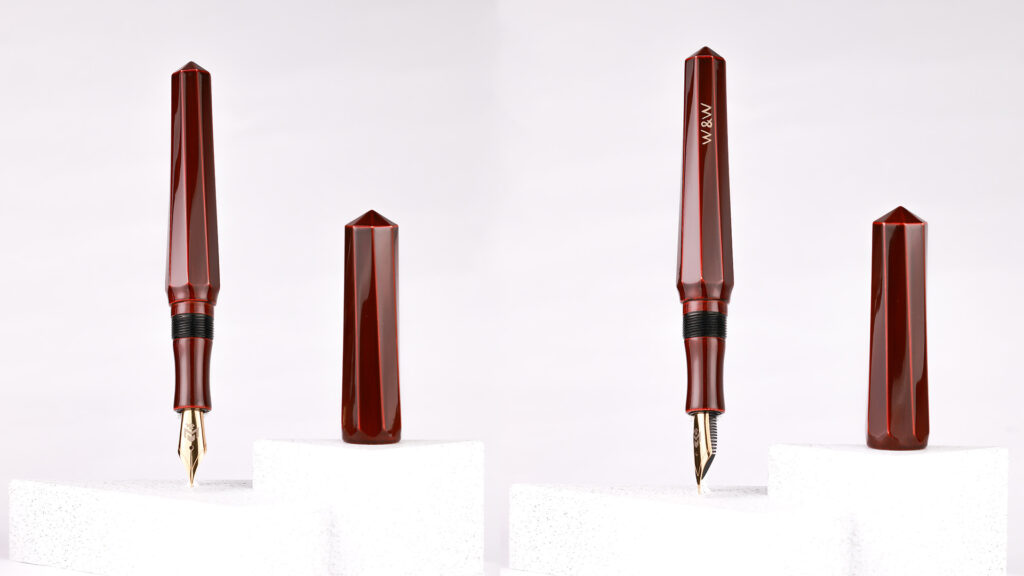
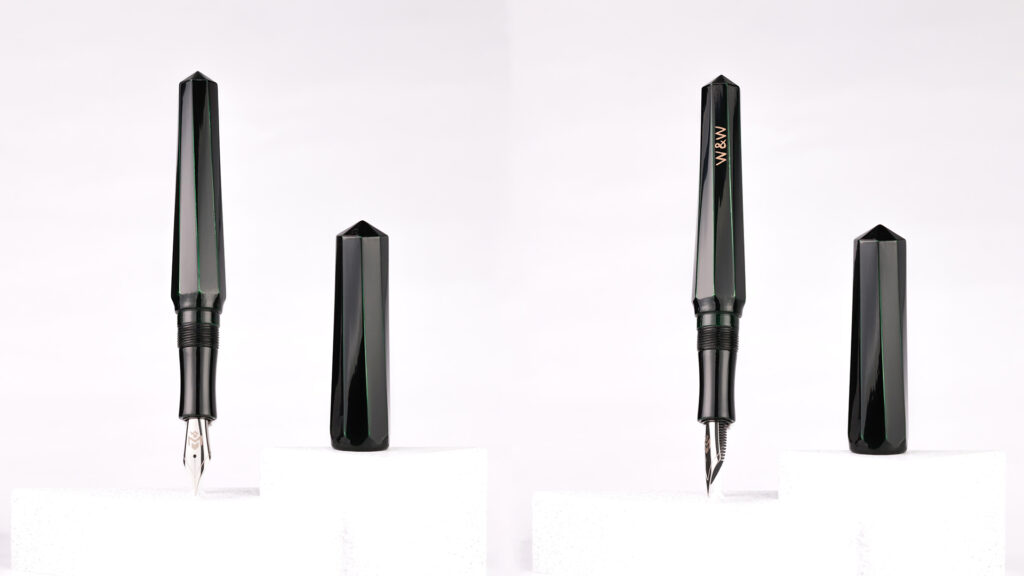
Designed and engineered in Belgium, the pen features a twisted octagonal form — eight facets flowing in subtle rotation, creating movement within solidity. Every dimension is deliberate. Every edge serves both structure and balance.
For the Urushi editions, the finished pen bodies are sent to Japan, where a traditional Urushi artist applies multiple layers of natural lacquer by hand. The process is slow, humidity-controlled, and rooted in centuries of craftsmanship.
European precision shapes the form.
Japanese tradition defines the surface.
Infinity Eight is not only a writing instrument — it is a dialogue between engineering and time.
The Geometry of Controlled Motion
At the core of Infinity Eight lies a twisted octagonal architecture.
Eight facets travel along the body in a measured spiral. This is not an aesthetic afterthought — it is a structural decision.
The octagon provides:
Defined planes for light interaction
Controlled grip without sharp discomfort
A visual rhythm that shifts as the pen rotates in hand
The subtle twist introduces movement into solidity.
A fixed object appears dynamic.
Light never rests on a single plane.
The name “Infinity Eight” reflects this continuous circulation of form.
Not a literal infinity symbol, but the idea of unending flow within a defined structure.
The geometry is engineered, not sculpted intuitively.
Each facet is calculated for proportion, balance, and ergonomic interaction.
Engineering as Foundation
Infinity Eight is developed with mechanical precision at its core.
Every dimension is intentional:
Section diameter
Wall thickness
Thread depth
Cap engagement
Weight distribution
The twisted body is not merely aesthetic complexity — it requires careful machining control to preserve uniformity across all eight planes.
Tolerance matters.
Even minor deviation would distort the flow of facets.
The pen must feel stable, centered, and balanced despite its dynamic geometry.
European engineering principles guide the internal structure.
The visible complexity rests on invisible precision.
The Geometry of Controlled Motion
At the core of Infinity Eight lies a twisted octagonal architecture.
Eight facets travel along the body in a measured spiral. This is not an aesthetic afterthought — it is a structural decision.
The octagon provides:
Defined planes for light interaction
Controlled grip without sharp discomfort
A visual rhythm that shifts as the pen rotates in hand
The subtle twist introduces movement into solidity.
A fixed object appears dynamic.
Light never rests on a single plane.
The name “Infinity Eight” reflects this continuous circulation of form.
Not a literal infinity symbol, but the idea of unending flow within a defined structure.
The geometry is engineered, not sculpted intuitively.
Each facet is calculated for proportion, balance, and ergonomic interaction.
Materials: Substance Before Surface
Before Urushi is applied, the pen exists as material.
Infinity Eight bodies are crafted from carefully selected materials, including high-grade Japanese ebonite and premium resins. These materials are chosen for:
Stability
Longevity
Tactile warmth
Compatibility with Urushi lacquer
Ebonite, in particular, offers a subtle organic warmth in hand — an ideal substrate for natural lacquer.
The material is shaped, refined, and finished in Belgium before it ever leaves the workshop.
Only once the structural integrity and surface preparation are complete does the second phase begin.

Materials: Substance Before Surface
Before Urushi is applied, the pen exists as material.
Infinity Eight bodies are crafted from carefully selected materials, including high-grade Japanese ebonite and premium resins. These materials are chosen for:
Stability
Longevity
Tactile warmth
Compatibility with Urushi lacquer
Ebonite, in particular, offers a subtle organic warmth in hand — an ideal substrate for natural lacquer.
The material is shaped, refined, and finished in Belgium before it ever leaves the workshop.
Only once the structural integrity and surface preparation are complete does the second phase begin.
Urushi: Time as Material
Urushi is not paint.
It is natural lacquer derived from the sap of the lacquer tree (Toxicodendron vernicifluum), a material used in Japan for over a thousand years.
Historically, Urushi was applied to:
Armor
Tea ceremony utensils
Architectural elements
Ritual objects
Its durability is legendary. Properly cured Urushi can endure centuries.
But more than durability, Urushi offers depth.
Each layer is:
Hand-applied
Cured in controlled humidity
Polished
Reapplied
The surface develops gradually.
Color emerges through accumulation.
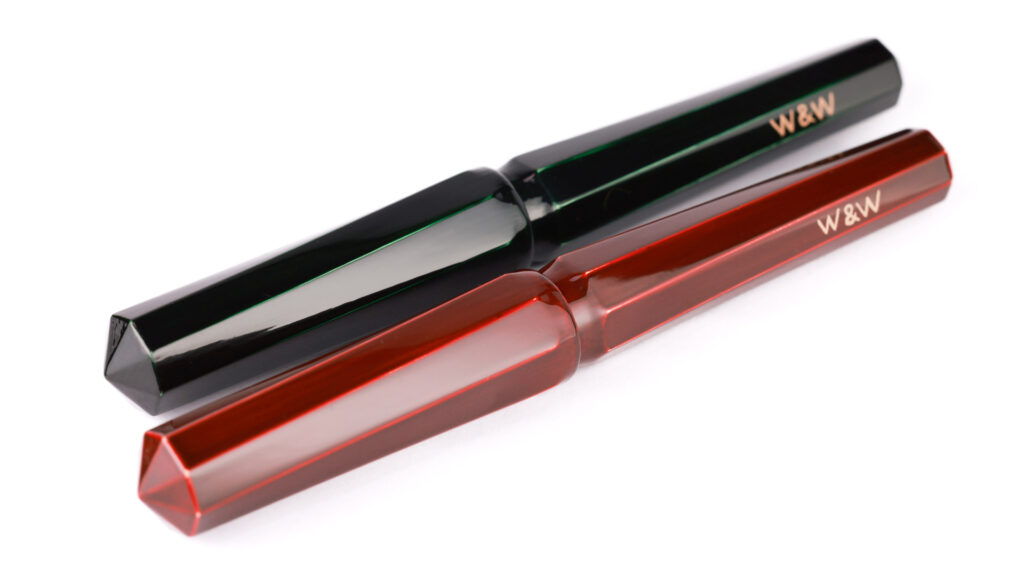
In techniques such as Tamenuri, the outer layer subtly reveals undertones at edges and high points. Light interacts differently depending on angle and intensity.
Urushi is slow by nature.
It cannot be rushed.
Humidity, temperature, and curing time dictate progress.
Time becomes part of the material.
Collaboration with a Japanese Urushi Artist
For Infinity Eight Urushi editions, the completed pen bodies are sent to Japan, where the lacquer is applied by a Japanese Urushi master.
This is not outsourced finishing.
It is collaboration.
The pen begins as engineered form in Belgium.
It evolves through traditional hand-lacquering in Japan.
Two disciplines intersect:
European structural engineering
Japanese surface craftsmanship
The artist in Japan works within a lineage of technique that predates modern industry. Each layer is applied with an understanding shaped by tradition rather than automation.
The result is not uniform industrial coating, but individual depth.
No two pieces are visually identical.
Philosophy: Control and Surrender
Infinity Eight embodies a dual philosophy:
Control and surrender.
The geometry is controlled, calculated, engineered.
The Urushi process introduces organic variation and time-based transformation.
The structure defines the boundaries.
The lacquer brings life within them.
The European approach seeks precision.
The Japanese tradition respects patience and gradual revelation.
Neither dominates the other.
Infinity Eight exists in the space between them.
Light, Edges, and Depth
The twisted octagonal form transforms under Urushi.
Each facet:
Catches light differently
Reflects at varying intensity
Reveals depth at its edges
The edges become transition zones — especially in layered techniques where undertones emerge subtly over time.
This interaction between geometry and lacquer is central to the design.
Without the twist, the lacquer would rest passively.
With it, the surface becomes active.
Writing Instrument First
Despite its conceptual depth, Infinity Eight remains a writing instrument.
A German-made Jowo nib ensures reliable performance and consistent ink flow.
Balance is centered to allow prolonged writing without fatigue.
The section transitions naturally from geometry to comfort.
The pen is meant to be used — not displayed alone.
Urushi will mature.
Micro-polishing from the hand will subtly alter the surface over years.
The pen evolves with use.
A Cross-Continental Object
Infinity Eight is shaped in Belgium.
It is lacquered in Japan.
It carries:
European engineering logic
Japanese material philosophy
Contemporary independent craftsmanship
It does not imitate tradition.
It does not industrialize heritage.
It connects them.
Infinity Eight in few words
A twisted octagon in quiet motion.
Engineered in Belgium with deliberate precision.
Eight facets. Continuous flow.
Structure shaped as infinity.
Finished in Japan with traditional Urushi lacquer,
layer by layer, time becoming depth.
A writing instrument
where engineering meets centuries of craft.